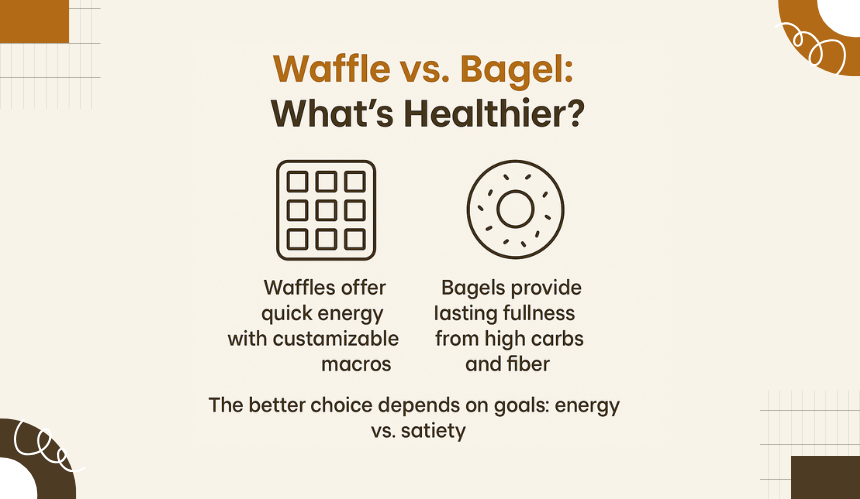
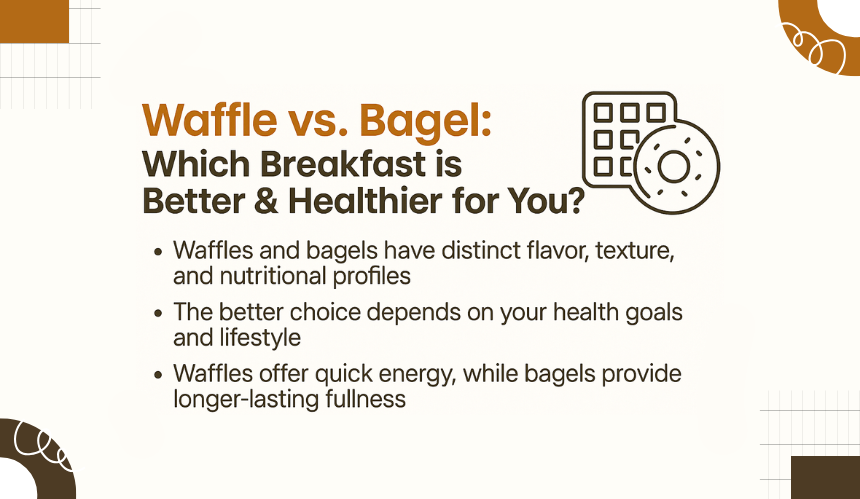
Waffle vs. Bagel: Which Breakfast is Better & Healthier for You?
Nutritional Breakdown: Waffle vs. Bagel
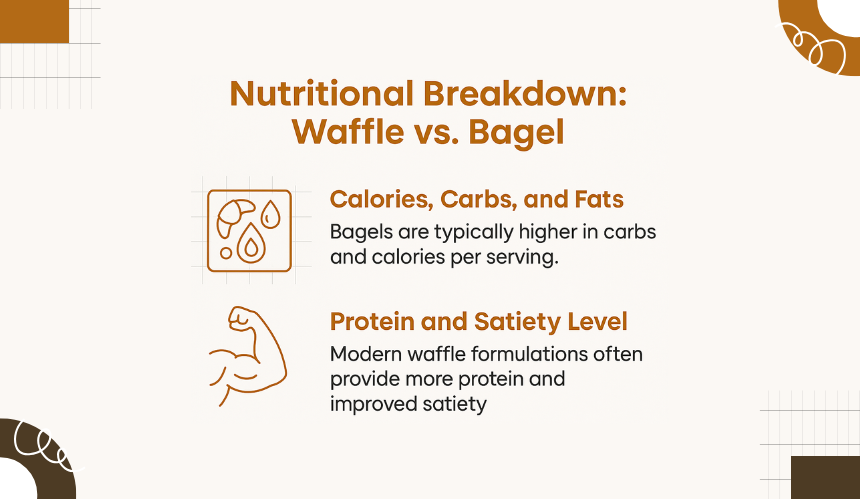
Calories, Carbs, and Fats
Protein and Satiety Level
Health Trends and Dietary Compatibility
Knowing the ways they coincide with particular dietary models can assist you in selecting the one that would suit your schedule better.
Waffle Compatibility with Modern Diets
Waffles are no longer restricted to white flour and syrup. They have been formulated into a very versatile form that can be used with various health-oriented dietary regimes:
- Whey, pea protein, or egg white high-protein waffles promote muscle recovery and post-exercise nutrition.
- Almond flour, coconut flour, or flaxseed meal are used in low-carb and ketogenic waffles, which have fewer net carbs and a lower glycemic load.
- Waffles can also be prepared gluten-free, using such ingredients as rice flour, oat flour or cassava, and can be consumed by people with celiac disease or gluten intolerance.
- They have a modular preparation format that can be customized in terms of nutrients; you can add fiber, adjust fat levels, or incorporate functional ingredients such as chia seeds or MCT oil.
Waffles are particularly well-suited to macro tracking, intermittent fasting, break-fasting plans, and performance-based nutrition because of their flexibility and ease of micronutrient fortification.

Bagel Compatibility with Modern Diets
Bagels have historically been high in carbohydrates, although newer recipes are more attractive to health-conscious consumers and diets.
- Whole grain and sprouted grain bagels add fiber and help maintain blood sugar levels, which makes them more appropriate with low-glycemic diets.
- High-protein bagels contain such ingredients as soy protein, chickpea flour, or supplemented egg whites to promote satiety and muscle maintenance.
- Thin-sliced or reduced-carb bagels are attractive to people who have to control their calories but like the comfort of a breakfast staple.
- Bagels pair naturally with nutrient-dense toppings such as avocado, smoked salmon, hummus, or nut butter, allowing for a complete macro-balanced meal.
Their dense structure and slow-digesting carbs contribute to prolonged energy release, which makes them popular in plant-based, Mediterranean, and balanced diet frameworks.
Quick Diet Match: Which Breakfast Fits Your Eating Style?
Here’s a quick comparison of how waffles and bagels stack up across common diet types. The “Waffle Compatibility” and “Bagel Compatibility” columns show how well each food aligns with specific dietary preferences or restrictions.
Dietary Pattern | Waffle Compatibility | Bagel Compatibility |
Low-Carb / Keto | High. Almond or coconut flour bases | Low to Moderate. Only select low-carb types |
High-Protein | High. Easily fortified with protein | Moderate. Fortified options available |
Gluten-Free | Widely available with alternative flours | Limited. Must be specifically labeled |
Mediterranean | Good when topped with healthy fats | Strong fit with whole grains, fish, and olive oil |
Plant-Based / Vegan | Easily adaptable with non-dairy ingredients | Works well with vegan spreads and toppings |
Taste, Texture, and Versatility in Meal Pairing
Flavor Profiles and Topping Compatibility
Popularity in Culture and Regions
Preparation and Convenience
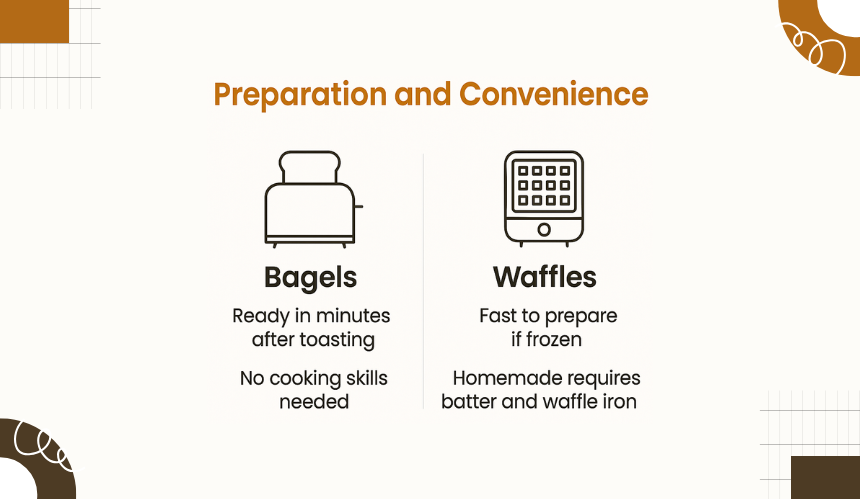
Which One is Easier to Prepare?
Which one is Easy to Store and Freezer-friendly?
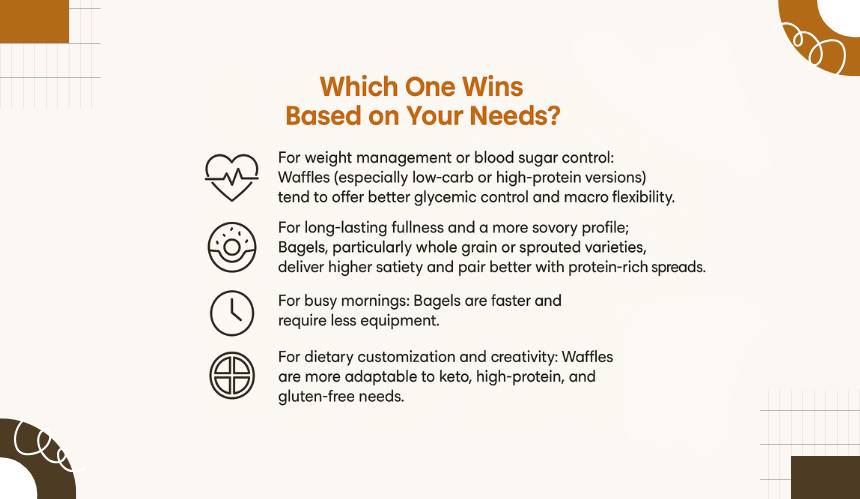
Which One Wins Based on Your Needs?
- For weight management or blood sugar control: Waffles (especially low-carb or high-protein versions) tend to offer better glycemic control and macro flexibility.
- For long-lasting fullness and a more savory profile: Bagels, particularly whole grain or sprouted varieties, deliver higher satiety and pair better with protein-rich spreads.
- For busy mornings: Bagels are faster and require less equipment, making them ideal for fast-paced schedules.
- For dietary customization and creativity: Waffles are more adaptable to keto, high-protein, and gluten-free needs.
Frequently Asked Questions (FAQs)
People often wonder about the glycemic impact. Bagels made from refined flour typically have a higher glycemic index (~72), leading to quicker blood sugar spikes, while waffles, especially those made with whole or low-carb flours, can create a more gradual glucose response.
However, for people with high blood pressure, neither traditional bagels nor waffles are ideal breakfast choices due to their typical nutritional profiles, especially when made with refined flour and served with high-sodium or sugary toppings.